Posted by: Jo | April 13, 2012

Guilty As Charged

“Blessed are they whose transgressions are forgiven, whose sins are covered. Blessed is the man whose sin the Lord will never count against him.” (Romans 4:7-8)

While sitting in church on Easter morning I was thinking about the incredible gift of salvation and why, as the apostle Paul puts it, some deem it to be foolish (1 Corinthians 1:18) and I was reminded of a story I had read long ago. It was a fictional story, but one I found had an amazing way of clarifying what salvation meant. Here is the story, as I remember it.

Timagehere was an honourable judge who lived in a small town who was respected by all who knew him. One morning he and his wife heard the sounds of a baby crying and stepping out the front door to investigate, found a baby lying in a basket with a note from a desperate mother saying she could not care for this small one. The judge and his wife tried all means to find the mother, but when all their searching failed they decided to adopt the little boy. The little boy was lavished with all the love this good father could give a child, but as the boy grew into a young man he began to rebel against his adopted parents. He refused to obey his adopted father and began to mix with other rebellious teenagers. He dabbled in drugs. He tried shop lifting. Eventually he ran away from home, (so he thought) to be free and his father mourned this adopted son he loved. Eventually the boy was involved in a botched “breaking & entering”, where someone was shot and he was arrested. On the day of his trial the boy was brought into court and when he lifted his eyes to where the judge was sitting he was startled to see his adopted father sitting at the bench, expecting to see a face full of anger he was surprised to see a face full of forgiveness. As he gazed at this loving face some incredible feeling swept over him. How could he have disappointed this loving father? How could he have disobeyed his teaching? How could he have brought so much pain to one who loved him? Too ashamed to look at his father, he whispered under his breath, “Forgive me”. The trial proceeded as planned. The evidence was clear. The boy was guilty. The judge rose to give his verdict. The whole court room was hushed as they waited to hear what the judge would say as they knew how just and honest he was and yet they also knew how much he
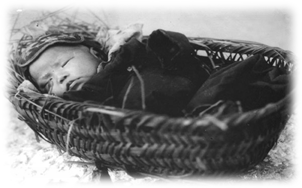
loved this boy. image

Guilty As Charged” rang out through the room.

The prisoner will serve 10 years in jail.

Then to the utter amazement of everyone present, the judge removed his robe, stepped down from the bench, stood in front of the boy and announced,

I will serve his sentence for him

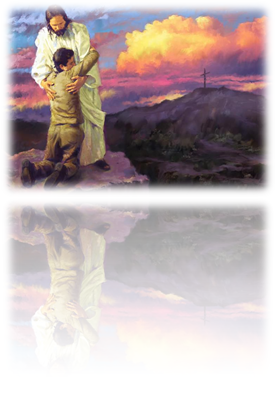
We would all be “guilty as charged” if we stood in front of our Heavenly Father, the Judge. The incredible message of Easter lies in the fact that even like the boy in the story we deserve to pay for our sins, we are set free.

“Therefore there is now no condemnation for those who are in Christ Jesus, because through Christ Jesus the law of the Spirit of life set me free from the law of sin and death.” (Romans 8:1-2)
image

Posted by: Jo | April 6, 2012

The Wondrous Cross

“This is love: not that we loved God. but that he loved us and sent his Son as an atoning sacrifice for our sins.” (1 John 4:10)

imageWhen one of my granddaughters was a little girl she was sitting on my lap and playing with the cross I was wearing and as she was fiddling with the chain she said, “Why do you wear this cross all the time?” Before I could reply she answered her own question. “Oh I know, you love Jesus.”, and immediately jumped off my lap and went off to play with her sisters. Initially I was pleased with her answer, but the more I thought about it I began to question my own motives for wearing this symbol of the most incredible gift of sacrificial love ever given to mankind. My husband and I are great fans of the writings of Brennan Manning and just recently we were reading a passage from his, “Reflections For Ragamuffins”, where he was addressing the way Christians viewed the cross and what he wrote made me stop and think more deeply about how the world and believers view our sacred emblem. This is what he wrote;

Lamentably, Christian piety has prettified the passionate God of Golgotha; Christian art has banalized unspeakable outrage into dignified jewelry.

The secular world has prettified the whole meaning of Easter with big fluffy bunnies and imagechocolate Easter eggs and even the church going population would rather fill the pews on Easter Sunday than agonize with our Lord on Good Friday. I began to grasp what Brennan Manning wanted his readers to see. The cross must always remain first and foremost as a constant reminder not of our inadequate human love towards our Heavenly Father, but of his incredible, overwhelming, unconditional love that was poured out for us in the form of Jesus’ blood.

Paul was very aware of the danger of losing sight of the powerful influence of the cross and warned his readers thus;

“…not with words of human wisdom, lest the cross of Christ be emptied of its power” (1 Corinthians 1:17)

And again in Galatians he warns about ignoring the offense of the cross;

“….In that case the offence of the cross has been abolished” (Galatians 5:11)

Over three hundred years ago, Isaac Watts, who was a prolific writer of hymns, summed up the powerful message of the cross in his famous hymn, “When I Survey the Wondrous Cross”. Isaac’s beautiful hymns were defined by his ability to affirm the Christian faith in a both spiritual and personal way and in this particular hymn he bares his soul as he writes of what takes place when he is confronted with the cross. Suddenly earthly things become paltry. Riches mean nothing. His pride becomes a contemptible thing. He is exposed to the most amazing love he has ever encountered. Love that demands a response from him. The final line sums up what standing at the foot of the cross can evoke in the very depths of man’s soul.

“Were the whole realm of nature mine,

That were an offering far too small;

Love so amazing, so divine,

Demands my soul, my life, my all.”

As we dwell on the last lines of this hymn, we suddenly glimpse a soul liberated, set imagefree, saved from the tyranny of sin, awed by the fact that he is the recipient of this gracious gift of love and we too can sing like Isaac Watts with equal awe, as we stand before the cross on this Good Friday.


Posted by: Jo | March 30, 2012

Spring Cleaning

“…let us draw near to God with a sincere heart in full insurance of faith, having our hearts sprinkled to cleanse us from a guilty conscience…” (Hebrews 10:22)

imageNothing can give a housewife more motivation to clean house than the news that visitors are about to become house guests. Perhaps mother-in laws have an edge, but usually the thought of any one being able to checkout closets and look in bathroom drawers is enough to get most of us going. Just recently I was expecting house guests to come and stay for a month. I will admit they were relatives, my daughter and son-in-law, but being family introduced another kind of pressure. I had preached long and hard to this now grown up lady about being tidy, and didn’t want to eat my words. Family honour was at stake. Spring cleaning would have to begin.

I began in the closet of the bedroom they were to occupy. I was amazed to find it was overflowing. Where had all these garments come from? I quickly realized a lot of discarding of unwanted items needed to take place. As I began to sort through the clothes I found this was easier said than done. I had grown attached to many occupants of this space. Some of them had been travelling with me for years! Regularly being packed and unpacked as we moved. It began to dawn on me that I was the real reason for the clutter in this closet. No wonder there wasn’t any space for visitors’ clothes. I had been carrying around with me unwanted and unused articles for years.

Our lives can sometimes become as cluttered as my closet with unwanted emotionsimage that rob us of the freedom to live life to the fullest. We hang on to that list of slights and grudges. We constantly go over our failures to keep reminding ourselves of how worthless we really are. Bitterness can take up a whole lot of space in our lives as we relive repeatedly, incidents from the past. Scripture warns us that bitterness can grow like a root (Hebrews 12:15) that entwines around our lives blocking the sunshine and not allowing the good to blossom. Even when we are aware of how unhealthy it is to cling to these destructive thoughts we seem reluctant to discard them and just “pack them back in our closet”

Spring cleaning in our lives can have a liberating affect that releases us from the bondage of carrying around garbage we don’t need. It is very difficult at first to look honestly at our secret hoard and to admit that we are clinging to stuff that needs to be dealt with. It is also difficult to admit we could do something about it. The next step is the most difficult, resolving to deal with it honestly.

When Jesus came across the invalid, lying beside the pool (John 5:1-11), he asks him what seems to be a strange question, “Do you want to get well?

The man doesn’t interrupt with a list of “buts”

  • but if you only knew how life has been hard for me
  • but if you only knew all the mean things people have done to me
  • but why are you bothering with a nobody like me?

imageHe suddenly believes Jesus is capable of wiping away 38 years that had been wasted lying beside that pool. He bravely discards the yesterdays and picks up his mat and walks.

Do we want to be well and have that abundant life that is promised for us? Now is the time for the spring cleaning to begin. Replacing negative thoughts is great way to start.

Paul writes to the Philippians with some good advice.

Finally brothers whatever is true, whatever is noble, whatever is pure, whatever is lovely whatever is admirable – if anything is excellent or praiseworthy- think about such things

Discarding the unworthy, the unlovable, the unjust from our lives will set us on the road to healthy living.

Posted by: Jo | March 23, 2012

Living Together In Unity

“How good and pleasant it is when brothers live together in unity!” (Psalm 133:1)

When our family was grown up and had flown the nest, my husband and I decided it imagewas time to sell our family home and buy an apartment. I had prepared myself for the challenges of living in a much smaller space, but I was quite unprepared for a much bigger challenge that assailed us, after we had moved in. Living with a group of very close neighbours! Of course I realised others would be sharing the building, but it took a while for it to sink in that sharing common areas proved to be a whole new learning experience. It was a surprise to hear differing views on decorating the lobby/ type of plants for the garden/ allowing pets/ how much money to pay for insurance etc. I began to realise that if we were to have a harmonious building we would have to be in tune with these new people in our lives. We would have to quash some of our own opinions about how we would run the affairs of our building and to listen to others and to accept what the majority believed to be best, otherwise living in our new apartment, however beautiful it was inside, was going to be far from pleasant. We needed to live in unity with others in the building.

The problem of living in unity is not only confined to apartment buildings. When there are groups of people living or working together, how to live in unity becomes a very important component of harmonious living and nowhere is it more important than in our church family. Paul quickly realised this with the little fledgling churches he had established and emphasised it repeatedly in his letters.

“ Be completely humble and gentle; be patient, bearing with one another in love. Make every effort to keep the unity of the Spirit through the bond of peace.” (Ephesians 4:2-3)

We may have believed that those who secret themselves away from the pressures ofimage the world in monasteries or convents have a better chance of achieving this living in unity, but St. Therese of Lisieux in her autobiography , “The Story of a Soul”, paints quite a different picture of life within the convent walls. She is very open about some of the annoying characteristics of those around her, even to one nun who complained bitterly all the time about her ailments to one who made odd clacking noises through the prayer time to another who playfully splashed water on those around her while doing the laundry. We readily sympathise with her. Her solution is one worth following. She easily admits to the Lord that she cannot love these particular ones as she is weak and imperfect, but says to him, “You, yourself must go on loving them in and through me”. [The Story of the Soul: Chapter 9]

imageHow do we relate to this story within our own church family? Would others exclaim, “See how they love one another”, as early pagans observed the early Christians, when they look at our congregation? Would others long to join us because our values are so different from the secular world? Would others note our unified steadfast belief in the Lord Jesus Christ? How can we present a unified front to those outside so that all who see us know we love and follow him who first loved us? How can we be like Therese and allow the Lord to love those difficult people in our lives, in and through us?

Paul has wonderful advice for all of us who long to live in unity with our fellow believers.

“Bear with each other and forgive whatever grievances you may have against one another. Forgive as the Lord forgave you. And over all these virtues put on love, which binds them all together in perfect unity. “ (Colossians 3:13-14)

Related articles

  1. Promoting Unity (myheartsmission.com)
  2. The Road to Unity (jasoncrandall.org)
  3. The Source of Humility that Leads to Unity (jasoncrandall.org)
  4. The Road to Unity is Paved with Humility (Part 2) (jasoncrandall.org)
Posted by: Jo | March 16, 2012

I Shall Not Be In Want

The Lord is my Shepherd, I shall not be in want.” (Psalm 23:1)

Psalm 23 is probably the best known and best loved psalm in the Bible and even people not familiar with Scripture have heard that first endearing phrase, “The Lord is my Shepherd”. The psalm is also often sung as a hymn in funeral services because of the comfort of verse 4,

“Even though I walk through valley of the shadow of death….”

but I have always been intrigued by the second phrase of the first verse,

“I shall not be in want.”

What could it possibly mean to be “in want”?

imageI found the dictionary to be very enlightening. This is what I found;

to be lacking; missing something; destitute; deprived of necessities; suffer from basic needs; ill provided; to stand in need; being in dire straits; hardship; abandonment.

What a bleak picture of someone in want! I began to realise why the psalm begins this way. The Bible delivers some of its most powerful messages through comparisons, the book of Proverbs being a good example, and this psalm is a stark comparison of two life styles; life with the Shepherd and life without him. David deliberately begins the psalm with these powerful words to remind himself and us the terrible alternative, “to be in want”, that awaits the foolish ones who would venture through life without the guidance of the Lord.

Perhaps one of the most startling illustrations of what, being in want means, is found imagein the book of Daniel in the story of Belshazzar (Daniel 5). No movie special effects can equal this creepy story, as a wild party is suddenly interrupted by a hand writing strange words on the wall. Daniel is able to give an interpretation through the power God has given him, and what a chilling news he delivers to the king, one of the words meaning this,

“Tekel: You have been weighed on the scales and found wanting” (Daniel 5:27)

To the world around, Belshazzar did not look like he was in want for anything. The thousand people invited to the banquet would have been impressed with his display of wealth; his daring in drinking from sacred goblets, stolen from the temple in Jerusalem; his countless servants and wise men imageready to answer his every beck and call, but yet he was truly in want as he had disregarded the one who held his very life in his hand,

“…You praised the gods of silver and gold, of bronze, iron, wood and stone, which cannot see or hear or understand. But you did not honour the God who holds in his hand your life and all your ways.” (Daniel 5:23)

How often in our own society today do we see people being led astray by worshipping the trappings of wealth? How often are others captivated by the adulation of others? How often still does fame have the power to corrupt? How sad to think that some are so blinded by the world’s standards they do not even know they are in want.

When we honour the one who made us and willingly follow where our imageShepherd leads us, we will never be in want. We can rest in the knowledge that no dire strait exists that cannot be solved by the one who holds our lives in his hand.

“Surely goodness and love will follow me all the days of my life, and I will dwell in the house of the Lord forever.” (Psalm 23:6)

Posted by: Jo | March 9, 2012

Tourist Or Pilgrim

“This is what the Lord says, “Stand at the crossroads and look; ask for the ancient paths, ask where the good way is and walk in it, and you will find rest for your souls.” (Jeremiah 6:16)

Some of the favourite T.V. programs my husband and I like to watch are those travel Pilgrim04series that are hosted by some genial travel guide that after a few viewings, one feels has become a close friend. We travelled a great deal when we were young, but nowadays arm chair travel is so much more comfortable than the real thing and there is no fuss with passports and security and all those other incidentals that plague travelers. Our only complaint with this type of travel is the speed in which our hosts rush us through beautiful cities and often when we would linger to have more time to absorb some complexity of the culture, our host is introducing us to, we are whisked off to yet another set of ruins or yet another bustling market. The big crowd scenes are the ones that tug at my heart the most, as I glimpse perhaps a small child with sad eyes, or look deep into a stranger’s face and wonder what pain has etched those lines on a face that has no smile to give, or has nobody noticed that old lady staggering under a load too heavy for her? I want to cry out to the camera man to stop and look more closely at the people rather than some ancient mosaic, but thePilgrim02 camera sweeps on and those sad faces are left behind with their stories left untold.

Life is often referred to as a journey and as I was pondering about the last travel series we had watched, I thought how true to life it was. Do we look at life through tourist’s eyes, only seeing fleetingly what is really happening around us? Are we so busy getting to the next big adventure we have lost sight of those who are on the journey with us? Do we see life as a constant seeking of self-gratification? Or do we see life as a sacred pilgrimage? A journey we take with others. A journey that in itself reflects the glory of the one we serve.

Over three hundred years ago John Bunyan wrote his famous hymn about just this topic, “He who would valiant be”. When I was a child this hymn was often sung on a Sunday morning in church and we called it “The Pilgrim Song” and I am sure I didn’t grasp the true meaning of these beautiful words, but I can remember all of us children shouting out the last line of each verse, because it had such a satisfying ring to it,

To be a pilgrim

So what did John Bunyan mean by that refrain? When I checked the dictionary I found Picture 006this definition, “one who journeys to a sacred place” The emphasis being on where the pilgrim was going was of the utmost importance. To be a pilgrim, where you were going and why you were going was the reason for the journey.

So how does our life become more pilgrim-like rather than tourist like?

Fortunately for those of us who love the Lord we have the perfect travel guide to refer to whenever we need direction.

“Let your eyes look straight ahead, fix your gaze directly before you.” (Proverbs 4:25)

Don’t focus on worthless things. Fix your eyes on Jesus

“Make level paths for your feet and take only ways that are firm.” (Proverbs 4:26)

Remove any moral hindrance that might trip you

“Do not swerve to the right or to the left; keep your foot from evil.” (Proverbs 4:27)

Make sure you are not distracted by any false teaching

When we earnestly desire our lives to be more pilgrim-like, we can sense the Lord walking along side of us and will hear him whisper,

“I guide you in the way of wisdom and lead you along straight paths” (Proverbs 4:11)

Pilgrim07

Posted by: Jo | March 2, 2012

Helping Others To See The Light

“Come, O House of Jacob, let us walk in the light of the Lord.” (Isaiah 2:5)

A few weeks ago some friends and I had a frightening experience during a power Light01outage in our building. I knew the elevator would not operate under the emergency power system so I had gone downstairs to escort my friends, who were coming to our Bible study, through the rarely used stairwell to our apartment. Just as the door from the lobby had slammed shut and we were on the stairs, the emergency lights suddenly stopped working. I don’t think I have ever experienced such incredible blackness. We couldn’t even see each other and for a moment a feeling of panic swept over me. I then remembered if I could reach the next landing there was a glass door leading to the resident parking that would give us some light. If I could hold open the door then all the others would have enough light to ascend the stairs safely. Sighs of relief echoed in the stairwell as I pushed open the door, held it open, and light lit up the darkness and as long as I held the door open everybody could see their way.

I was thinking what a wonderful example our experience was for all of us to remember, that on our Christian walk we accompany others and there will be times when we will be called upon to hold open that door to let the light in, when others are trapped in darkness. Darkness can take on all different forms as we pursue life; darkness can sweep over us when grief in losing a loved one occurs in our lives; Light07darkness can engulf us when ugly doubt invades our minds; darkness can come in waves of pain in the betrayal of a friend. Sometimes a combination of so many forms of darkness beset us, depression leaves us bereft of any hope. St. John of the Cross, a Christian mystic, called this terrible experience as, “The dark night of the soul

In the classic, “Pilgrim’s Progress” by John Bunyan, the main character, Christian comes across all forms of darkness, but before darkness can overcome him, companions appear beside him, the main ones being, Faithful and Hopeful, and because of their total belief in the Lord Jesus Christ they are able to shed light on whatever Christian is going through and he gains strength to keep going. Faithful and Hopeful both use God’s word to reassure Christian and my favourite scene comes at the end of the book where Christian is just about to enter the Celestial City, but there is the last river to cross and Christian nearly sinks as he is overcome by doubt, but Hopeful reminds him of Jesus’ love for him and he is able to cry out and remember these lovely words and with the strength that gives him, he holds his head above the water.

“When thou passeth through the waters, I will be with thee; and through the rivers, they shall not overflow thee…” (Isaiah 43:2 KJV)

Over and over again the Psalmists knew that the Lord was the answer to any darkness in their lives,

“You, O Lord, keep my lamp burning; my God turns my darkness into light.” (Psalm 18:28)

Light05When we know this truth deep in our hearts, we are able to walk beside those who are steeped in darkness and bring his light to dispel whatever is blocking theirs and when we look back on our own lives we can give thanks for those Faithful and Hopeful ones the Lord placed in our lives to shed light when we really needed it in our own times of darkness.

“For with you is the fountain of life; in your light we see light.” (Psalm 36:9)

Posted by: Jo | February 24, 2012

Being Evergreen And Bearing Fruit

“But I am like an olive tree flourishing in the house of God; I trust in God’s unfailing love forever and ever” (Psalm 52:8)

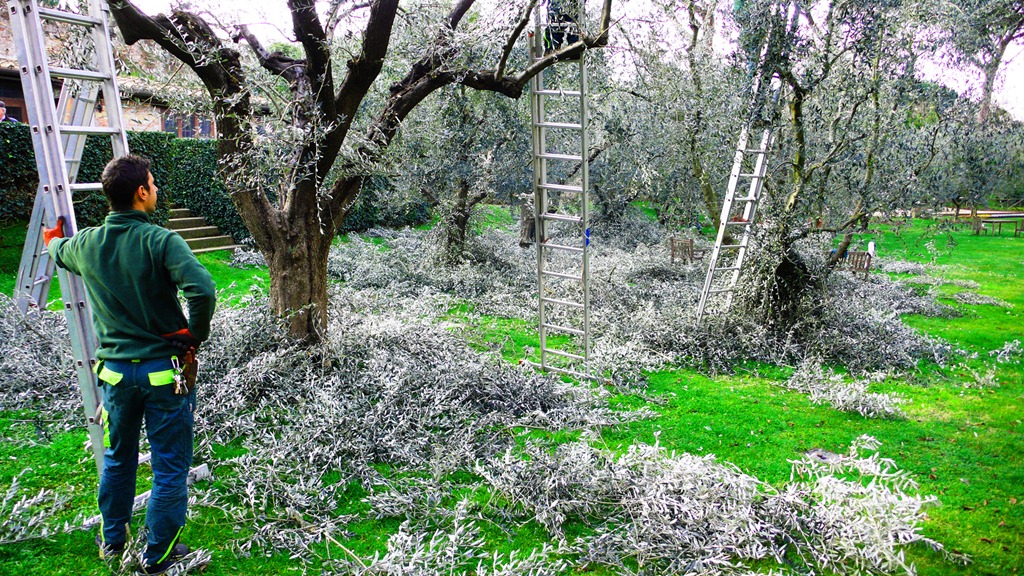
Evergreen04Our eldest daughter is married to a Greek Cypriot and lives on the island of Cyprus in the Mediterranean. When we visited for her wedding we were entranced with the culture and the long recorded history of this fascinating country. While we were there we were taken to visit her father-in-law’s orchard. It was lush and beautiful, but what caught our eye was the olive grove. These ancient trees have a long history (just like Cyprus itself) and there have been recordings of these trees growing on Crete, an island near Cyprus, as far back as 3,500 years ago. The olive leaf is steeped in tradition as, the leaf, that the dove brought back in its beak to Noah (Genesis 8:11), and has ever since been an international sign of peace. I was surprised to learn how long these trees live and to also learn that some olive trees can pass from one generation to the next with father and son caring for the same trees. The secret lies in the loving care provided for the trees. When olive trees grow in the wild, their trunks become gnarled and the branches become entangled with one another. One of the ways the trees remain evergreen and fruitful in the orchard setting, is in the careful pruning.

When I learnt this I was reminded of Jesus’ words to his disciples when he used the metaphor of pruning to impress upon them and us, how our own lives are like unruly bushes that sometimes need pruning.

“I am the true vine, and my Father is the gardener. He cuts off every branch in me that bears no fruit, while every branch that does bear fruit he prunes so that it will be even more fruitful” (John 15:1,2)

I have never quite liked that idea of being pruned, but armed with my new knowledge Evergreen02about the olive trees I decided to think more deeply about those words and what they could mean in our lives. One of the things I had gleaned from my lessons about pruning the olive trees was that one of the problems was one that was hardly noticeable at first. Little suckers would begin to start down near the base of the tree and slowly increase in number, draining the tree of sustenance, not bearing fruit in themselves but weakening the rest of the tree so fruit became scarce. A light went on for me. What have I let creep into my life that is drawing me away from prayer/ worship/ Bible study so that I am not as fruitful? I would be happy to have the Lord remove them.

The other problem for the olive tree is the dead wood that forms and if left there the new branches become entangled in it and the tree ceases to thrive as it once did. What dead wood am I hanging on to that should have been banished long ago? / Bitterness/ grudges/ past failures/ bad memories. I would be happy to have the Lord remove them.

Those words of Jesus took on a whole new meaning for me. A very dear friend wrote a beautiful poem about this very subject and she has summed it up completely.

Oh Lord, please prune these wild and useless branches from my life,

They block my vision of the vine and cause me endless strife.

The branches grown of willfulness and stubborn, foolish pride

Are not the branches chosen to abide.

But branches that bear fruit of joy and love

Receive the blessings from the Father up above.

I long to bear the fruits of peace and gentleness,

They seem so difficult to grow I do confess.

So when you prune, please prune with gentle care

So that the pain I will be sure to bear.

Wrap up the wounds with sweet and gentle grace,

And help me focus on my Master’s face.

Posted by: Jo | February 17, 2012

Delighting In The Lord

“Delight yourself in the Lord and he will give you the desires of your heart” (Psalm 37:4)

When my two granddaughters were little girls my daughter worked on a Saturday and Delight09as she had to begin work at 8am, babysitting became a problem, so my husband and I agreed to mind them, if she would drop them off to us. We live in a condo so we made sure our door was unlocked opening on to the corridor and the Saturday ritual began It was always the same, we would hear them long before we saw them, as they pounded down the corridor, and then the door would be flung open with the cry, “We’re here!” (just in case we hadn’t noticed). There was such joy on their little faces at the thought of spending time with us and the feeling was mutual. They expected to be loved. They expected their grandfather would protect them. They expected to be comforted if they fell and bruised themselves. They were expecting us to delight in them and they themselves were going to delight in being with us.

Those two little girls are now teenagers, but I was thinking back on those days when I came across this verse,

“The Lord your God is with you, he is mighty to save. He will take great delight in you, he will quiet you with his love, he will rejoice over you with singing” (Zephaniah 3:17)

Delight05I love this verse and always get a mental picture of the sturdy arms of a father, quieting the restless baby, just with the strength of his love and the soothing of a lullaby, but it also reminds me of how much our own Heavenly Father wants to delight in us. So how do we approach our time with the Lord? Do we see our time with him as a time of mutual delight? Do we approach our prayer time in eager anticipation of the joy we are going to experience and also to expect to give joy in return? Too often, many of us have been influenced by others’ ideas about a stern Father figure who demands obedience and any approach of expecting mutual delight is crushed by this misconception.

During my quest to understand this beautiful word “delight” I consulted a concordance and Delight01was amazed at how often the Lord impressed upon his people that he delighted in them. I then went to the dictionary to find that the dictionary defines it as; “to take great pleasure in, to be highly gratified by, to enjoy greatly” I also discovered that those that had this close relationship with the Father were in turn delighted with him.

“I delight greatly in the Lord; my soul rejoices in my God…” (Isaiah 61:10)

Knowing that someone is just waiting to enjoy you certainly puts a whole new perspective on the relationship. Knowing that the Lord is eager to receive our love and is longing to take great pleasure in us, releases us to experience great intimacy with him. Knowing that the door is always open and his welcoming presence never changes makes it so easy to run in joyfully and cry. “We’re here!” and to expect his gracious out pouring of love.

This very old hymn reveals the Father’s love.

Absolutely tender

Infinitely true

This is God our Father

Understanding you

Absolutely lovely

Exquisitely near

This is God our Father

Nought have we to fear.

Posted by: Jo | February 10, 2012

Born To Be You

“I praise you for I am fearfully and wonderfully made; your works are wonderful, I know that full well” (Psalm 139:14)

Last year I attended a fascinating seminar entitled, “Fearfully and Wonderfully Made”. BornToBeYou04The guest speaker was a young lady who had a startling story to share with us. She was only a teenager when she was chosen, through a modeling contest, to join a high end fashion house. She soon found herself in Paris and working there was heady and exciting stuff for one so young, but what looked like a glamorous career for those who were observing these beautiful women parading down the catwalk, turned out to be quite the opposite. She discovered her self-worth was dictated by how thin she could keep her body so those beautiful designer clothes would be shown to their best advantage. She was even offered appetite suppressant pills to help her to do this.  She was constantly comparing herself to the other models, envying their glossy hair/ long legs etc. and even though in the eyes of the world she was very beautiful, she felt she never quite measured up, she was desperately unhappy. The great turn around happened to her while reading Psalm 139; she was suddenly made aware that she possessed a divine birthright. She had been designed by the Creator to be just as he had made her and fortunately for our speaker, she was able to recognise her mistake in accepting this lifestyle and with the help of her Christian parents was able to leave this career behind. She told us that when she grasped the true meaning from this verse (Psalm 139:14)

I praise you because I am fearfully and wonderfully made;
your works are wonderful,
I know that full well

She was flooded with relief and she has been sharing her experiences, especially with young women, ever since, helping them to accept themselves as wonderful creations of the Heavenly Father.

We don’t have to be a young teen age model to have self-doubts about our self-worth. BornToBeYou01Many of us have grappled with thoughts of never quite measuring up compared with others. We may have had this reinforced as children, with words like this;

“why don’t you do well at school like your brother”?

“why don’t you play sports like the girl next door”?

“why haven’t you more friends at school”?

Perhaps as we grow older we imagine more put downs for ourselves. We can think of all sorts of reasons why we do not measure up to those around us. This is when we need to stop and claim our birthright which our Heavenly Father has bestowed upon us.

When God decided to make mankind this is what he said,

“Then God said, “Let us make man in our image, in our likeness….” (Genesis 1:26)

And when he had finished this is what he said,

“God saw all that he had made, and it was very good…” (Genesis 1:31)

BornToBeYou03How comforting to know we are exactly as God designed us to be! We are made in his likeness and God sees us as being very good.

We certainly come in all shapes and sizes with wide ranges of gifts and potential and the secret to claiming that birthright is to accept who we are and to strive to fulfill what God has planned for us to be, to his glory.

Aleksandr Solzhenitsyn thought of it like this,

“I felt as though I was about to fill a space in the world that was meant for me and had long awaited me, a mold, as it were, made for me alone..”

When we hear our Heavenly Father whisper, “You were born to be you”, what a joy it is to accept our special space made for us alone.

« Newer Posts - Older Posts »

Categories