Posted by: Jo | August 23, 2013

You Don’t Know My Story

“Stop judging by mere appearances, and make a right judgment.” (John 7:24)
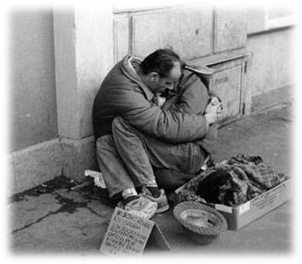
image Just recently one of my daughters was going into one of those expensive coffee shops to buy herself a cup of coffee and as she arrived at the door, she had to pass a man in a wheel chair begging for money. Her first reaction was one of annoyance, but as she made her purchase, she suddenly felt contrite and realised she knew nothing about that man and also realised she didn’t know his story or any of the circumstances that may have caused his present predicament, so she quickly returned to give him some money.

“You don’t know my story” This sad statement can be the reason for so much misjudging in our present society. We make snap judgments about those who may look and act differently from us. We quickly label, losers, those who we think have not quite made the grade. We quickly dismiss those broken ones, somehow blaming them for their own misfortune. We quickly avoid those who seem to have so many problems, thinking it must be their fault somehow. Knowing another’s story is not a top priority with most people. We greet each other with the perfunctory, “How are you?” not really listening to the reply or really being concerned with the other’s welfare. Many of us choose to answer that question with the cover up answer, “I am fine.” because we feel the questioner does not care about the true answer.

How can we, who follow the Lord Jesus, listen closely to those who are hurting or have been wounded in some way, so we get to know their real story?image

When my mother was getting ready to go out somewhere special she would often say to my father. “Just give me time to put on my face.” She of course was referring to her makeup, but many of us are guilty of covering up some inner pain by putting on the pleasant face of pretending everything is just fine. One of the ways to learn another’s story is to listen closely to what is behind that meaningless, “I am fine.”

Scripture begs us to have compassionate hearts towards one another.

“Therefore as God’s chosen people, holy and dearly loved, clothe yourselves with compassion, kindness, humility, gentleness and patience.” (Colossians 3:12)

I decided to go to the dictionary for the definition of compassion. What a beautiful word! This is what I read;

com·pas·sion [kuhm-pash-uhn] – understanding or empathy for the suffering of others, co suffering , walking beside, suffering together with

Our greatest example of compassion is the Lord Jesus himself;

“When he saw the crowds, he had compassion on them, because they were harassed and helpless, like sheep without a shepherd.” (Matthew 9:36)

Many of us have experienced trials in our lives where we have felt harassed and helpless, that is when we most need a compassionate listener to hear our story, someone to have empathy, to walk beside us, to understand the pain which we keep hiding from others.

We all have to be astute in our listening skills, not accepting “I am fine.” when we sense that a friend/ a family member/ one of our church congregation needs to unburden their story.

We all have to be wary of judging a person/ an incident / random rumours before we know the story. image

We also have to be willing to tell our stories when we know the person asking is a compassionate follower of Jesus Christ, and knowing that our Heavenly Father is filled with compassion for all his children.

“Because of the Lord’s great love we are not consumed, for his compassions never fail” (Lamentations 3:22)

Posted by: Jo | August 16, 2013

Learning To Forgive, Learning To Be Forgiven

“I, even I, am he who blots out your transgressions, for my own sake, and remembers your sins no more.” (Isaiah 43:25)

image My Sunday school days are a bit vague, but some of the Bible stories, especially from the Old Testament, are vivid in my mind. The story of Joseph is one of them. I can see myself carefully coloring in that beautiful coat of many colours that the Sunday school teacher had prepared for us. How did they photo copy in those days?! Perhaps the poor lady had to trace a picture for each one of us from a book. I remember how horrified we were at those bad brothers being so mean to Joseph to throw him into a pit and then sell him. Just as we were relieved that he was bought by a good man, he lands in gaol. We begin to wonder if God loves him. At last God delivers him and he finally has a chance to get back at those mean brothers of his, but wait, he doesn’t! He forgives them. What is wrong with him? He finally has the chance to pay them back for all the bad things they did to him, but instead he saves their lives and blesses them with good things.

The story of Joseph is such an eye opener to what it means to forgive and to be forgiven. On the one hand we have Joseph spending many years learning how to forgive. We don’t know the conversations he had with God about all the injustices he had suffered, but we do know he did not forget the powerful God he served. When he is finally is brought before Pharaoh, he says this when Pharaoh asks him if he can interpret dreams;

“I cannot do it,” Joseph replied to Pharaoh, “but God will give Pharaoh the answer he desires.”” (Genesis 41:16)

Later Pharaoh recognises that Joseph has been specially chosen by God;

“…Can we find anyone like this man, one in whom is the spirit of God?” (Genesis 41:38)

We also know that he was able to forgive his brothers.

“Then he threw his arms around his brother Benjamin and wept, and Benjamin embraced him, weeping. And he kissed all his brothers and wept over them. Afterward his brothers talked with him.” (Genesis 45:14 – 15)

imageOn the other hand we have the brothers who do not deserve to be forgiven, but because of the spirit of God, now firmly planted in Joseph, they are totally exonerated. Strangely enough they cannot believe or accept the forgiveness so freely given to them.

“When Joseph’s brothers saw that their father was dead, they said, “What if Joseph holds a grudge against us and pays us back for all the wrongs we did to him?”” (Genesis 50:15)

I think many of us can to relate to the brother’s fear. In our minds we believe the Lord loves us unconditionally, but how can we forgive ourselves? Many of us can be crippled in our Christian walk by not accepting the beautiful gift of forgiveness, hanging on to past errors, never quite believing the Lord has promised us he has forgotten them. Always going back over the past. Always feeling (like Joseph’s brothers) that eventually some form of retribution will follow. We need to take these words to heart;

“For I will forgive their wickedness and will remember their sins no more.” (Hebrews 8:12)

image The wonderful examples of forgiveness and being forgiven recorded in Joseph’s story are a forerunner of our Saviour’s love for us. We need to incorporate them into our daily lives. We need to learn to forgive, but we also need to learn to accept forgiveness and when we can, suddenly it is so much easier to forgive others.

“Bear with each other and forgive whatever grievances you may have against one another. Forgive as the Lord forgave you.” (Colossians 3:13)

Posted by: Jo | August 9, 2013

Jubilant Praise To The Lord

“Clap your hands, all you nations; shout to God with cries of joy.” (Psalm 47:1)

image Our church has just completed a week of fun, fellowship and following Jesus in a day camp for youth, held in our church. The theme was Treasure Island Adventures. Treasure hunts always instill a feeling of expectation and wonder and the beautiful expectation for the children was that they would discover that they were the treasure and it was God who was actively seeking them. The completion for the camp occurred in the Sunday service which was organized and run by the youth and what a breath of fresh air it was! The participants and their youth leaders wore distinctive red shirts and as we oldies entered the church the excitement of the youngsters was infectious and the whole building was filled with an air of enthusiasm which spread throughout the whole congregation. They started with one of their camp songs and with much clapping and lots of actions they shouted with cries of joy to the Lord. I am sure the Heavenly Father was smiling as he received this riotous praise from these little ones. I thought, a little sadly, that as we become adults we lose the spontaneity of children and yet over and over again, the psalmists in particular, urge God’s people to be jubilant in praising him, not limiting uninhibited joy in worship to the young, but to all of God’s children no matter what their age.

“Shout for joy to the Lord, all the earth, burst into jubilant song with music; make music to the Lord with the harp, with the harp and the sound of singing, with trumpets and the blast of the ram’s horn- shout for joy before the Lord, the King.” (Psalm 98:4-6)

So the big question I was left with at the end of this special service was; how can we be more joyful and jubilant in our praise to the Lord, not just on Sundays, but in our everyday lives?

Again I turned to the Psalmists for advice;

“This is the day that the Lord has made; let us rejoice and be glad in it.” (Psalm 118:24)

Starting the day speaking with the Lord has always been a good idea, but sometimes thinking through what lies ahead can reduce our prayers to a list of pleas for help to even survive the day, with all its imagined worries, and the idea of joyful praise somehow does not feature in our prayers. What the psalmists had figured out is that when we begin with joyfully greeting the Heavenly Father, no matter what trials and tribulations we may be experiencing, and when we realize the Lord has made this day, the day ahead takes on a whole different perspective. Strangely enough we draw strength from rejoicing with praise when we come into the Lord’s presence.image

The other message in our Youth service was a powerful one. The children were asked to find God incidences which might be right close by, but were a bit like treasure, one had to look carefully to find them. What a great message for us who are older, as well, rather than focusing on our problems for us to find something beautiful to shout for joy to the Lord. The word itself, JOY, brings about that warm feeling that changes the way we look at life. I came away from that service with joy in my heart and the words of a song running through my mind.

The joy of the Lord will be my strength.

I will not falter, I will not faint.

He is my Shepherd I am not afraid

The joy of the Lord is my strength

The joy of the Lord

The joy of the Lord

The joy of the Lord is my strength.

Posted by: Jo | August 2, 2013

A Sure Foundation

“Unless the Lord builds the house, its builders labor in vain…” (Psalm 127:1)

imageOur neighborhood is in the middle of rapid expansion. Old houses are being torn down and in their place, multi-storied buildings which will house enough people to fill a village, are rising in their place. Our streets are filled with men wearing hard hats and flag people waving signs warning of huge vehicles and cement trucks backing up lanes. On reading one of the warning signs, “Construction Zone”, one of my friends remarked, “Should read Destruction Zone”. Apart from the chaos and traffic problems, I have been fascinated by watching the preparations that take place before the building takes on any recognizable shape. It seems to me that preparing the foundation for these mighty buildings is a painstaking, meticulous and lengthy task. I have watched as the huge holes are filled with concrete laced with steel strips. I have seen steel rising out of the base of concrete to form yet more sturdy supporting walls. It has been reassuring to see the effort made to secure a firm and sure foundation for these buildings. The world was shocked recently by the tragedy in Bangladesh when a clothing factory collapsed killing thousands due to faulty building practices and lack of careful maintenance. A good warning for any country about sure foundations.

While I was watching one of the layers for these huge buildings, I thought of one of the favorite Sunday school songs we used to sing as children, “A wise man built his house upon a rock.” We loved this song.  We always sang with much gusto and with much pounding of closed hands as we imitated sturdy builders. The last verse had a powerful message, “So build your life on the Lord Jesus Christ.”

“So this is what the Sovereign Lord says, ‘See, I lay a stone in Zion, a tested stone. A precious cornerstone for a sure foundation; the one who trusts will never be dismayed.’” (Isaiah 28:16)

image We seem to be living in very shaky times. Many of the values we grew up with have been discarded as old fashioned. Tolerance of evil is obvious in horrific stories we read in the media. A kind of “dog eat dog” attitude abounds in the business world where one is applauded if that noisy whistle blower is silenced and any wrong doing is quickly covered up.

We are not even surprised when respected members of the community are found out to be liars or cheats. We worship the rich and famous not bothering to find out how they made their money. Paul has a warning for those who build their lives around wealth;

“For no one can lay any foundation other than the one already laid, which is Jesus Christ. If any man builds on this foundation using gold, silver, costly stones, wood, hay or straw, his work will be shown for what it is, because the Day will bring it to light. It will be revealed with fire, and the fire will test the quality of each man’s work.” (1 Corinthians 3:11 – 13)

image When we go back to that sweet little children’s song, the solution for us to live a stable and fulfilled life, not to be shaken by what rages around us, firmly anchored in the Heavenly Father‘s love, is found in the last verse, “So build your life on the Lord Jesus Christ.” The prophet Isaiah assures us that when we have that precious cornerstone supporting us we will never be dismayed. Storms can rage, waves can crash, but we will stay firm because the Lord is the builder for our lives and he has laid for us a foundation that will never be shaken. The words of this modern hymn remind us of the Trust Worthy One.

Jesus, you’re my firm foundation

I know I stand secure.

Jesus you’re my firm foundation

I know I stand secure

I put my hope in your Holy Word

I put my hope in your Holy Word.

Posted by: Jo | July 26, 2013

Softening The Hardened Heart

“So, as the Holy Spirit says: “Today, if you hear his voice do not harden your hearts as you did in the rebellion, during the time of testing in the desert…”” (Hebrews 3:7 – 8)

image Anybody who loves to bake will recognize my cry of distress, “Oh no I have no brown sugar!”, while I was in the middle of baking a favorite coffee cake, and discovered the container where I keep the brown sugar was empty. While I was bemoaning this fact I remembered that quite a while back I had bought brown sugar sealed in a plastic bag and realized I must have left it way back on the shelf in the pantry. More cries of distress as I picked up the plastic bag to find that the bag of sugar, lying so long in my cupboard unused, had become as hard as rock. Now useless, it’s sweetness locked inside, no good for anything. It suddenly occurred to me that this bag of sugar was a very graphic example of the hardened heart the writer of Hebrews was cautioning his readers about.

Our hearts, once they are filled with the Holy Spirit and dedicated to following our Lord, can become soft and sweet, available to spread the sweet aroma of Christ to others around us, but if we allow them to stagnate like my bag of sugar, slowly they become calloused and hard so any sweetness is locked inside, no longer of any use to spreading the good news.

So how do we guard against that ugly hardening? The verse in Hebrews has a key phrase , “if you hear his voice”, if we allow other voices to blot out what our Lord is saying to us, or if the persuasive words of the worldly kingdom override his commandments, we will become as ignorant as those Paul was talking about in his letter to the Ephesians;

“They are darkened in their understanding and separated from the life of God because of their ignorance that is in them due to the hardening of their hearts.” (Ephesians 4:18)

image But God’s powerful words have an amazing way of sweetening our natures, unlocking the hardness in our hearts, allowing us to be productive and useful if we are prepared to spend time with him and absorb his words deep within our beings.

“How sweet are your words to my taste, sweeter than honey to my mouth! “ (Psalm 119:103)

The other interesting phrase in that quote from Hebrews is, “in the time of testing.” Have you noticed that the very time you are being called upon to have sensitive and compassionate hearts, is the very time you seem to be surrounded by all sorts of pressing problems or the busiest schedule you have ever had to cope with? It is easy to tell yourself, I am far too busy to listen yet again to that neighbor who is so lonely. I am far too preoccupied to look for newcomers at church. Surely they don’t expect me to help? Or perhaps the most dangerous thought that can cause hardening of the heart is; there is too much I have to get through today, so there is no time to read my Bible or pray.

The psalmists knew the importance of keeping their hearts tuned to God’s word.

“I have chosen the way of truth; I have set my heart on your laws.” (Psalm 119:30)

And again

image“I run in the path of your commands, for you have set my heart free.” (Psalm 119:32)

I am going to try to remember my useless, hardened brown sugar the next time I feel that I am allowing worldly thoughts to creep into my mind and letting them begin that hardening process of my heart; I will remember the beautiful promise in Ezekiel; I will remember the wonderful remedy for hardness of heart lies close at hand, I just need to creep back into my Saviour’s presence.

“I will give you a new heart and put a new spirit in you; I will remove from you your heart of stone and give you a heart of flesh.” (Ezekiel 36:26)

Posted by: Jo | July 19, 2013

Looking Beyond Outward Appearances

“…The Lord does not look at the things man looks at. Man looks at the outward appearance, but the Lord looks at the heart.” (1 Samuel 16:7)

image When I was a student at Regent Graduate School of Theology, I happened to sit next to a young girl in one of the classes I was taking, and after talking to her at the break I discovered she was living a few streets away from me and I offered to take her home and if she wished I could also pick her up each day during the course. This young lady had overcome incredible obstacles in her life. She had been born with Cerebral Palsy and subsequently both her legs were damaged. She was able to walk, but needed to have braces and on her arms were attached metal poles which she was able to propel herself forward slowly by swinging from one side to the other. During the weeks that followed I became very fond of her and was constantly awed at the way she accepted her handicap, but one day she allowed me to see the inward pain not visible to those around. This particular day she was getting into the car and as she smiled I exclaimed, “You have such a beautiful face when you smile!’. She replied quite bitterly, “Nobody notices my face, only these.” and she pointed at her steel supporting canes. Just for a moment I felt her pain as I realised how often we look at outward appearances instead of discovering the real person beneath the exterior.

Many years later, I experienced in a much milder way, how the general public view any abnormality, and tend to focus on that rather than to see the real person. I had brokenimage my pelvis in a fall and needed a wheel chair for several weeks while it healed. Mine was a temporary disability, but what a lesson I learned while I needed to be pushed where ever I went! I heard sighs of irritation as others tried to rush past and felt their exasperation if I had to maneuver slowly through doors. I felt as though shop assistants spoke in simple terms to me as if my brain had been damaged as well as my pelvis. I was made aware that I was a nuisance if I was taken to a busy mall. All of which made me much more sensitive to others when I finally was able to walk without assistance.

How can we, as those who love the Lord, learn to look beyond outward appearances?

“A new command I give you: Love one another. As I have loved you, so you must love one another.” (John 13:34)

Jesus expounded on the original love commandment by saying, not just love one another, but love like I love you. When we humbly agree that the Lord loves us not because we are all put together with no blemishes, but just as we are, we are more willing to accept those around us, not judging by outward appearances, but looking for that inner child loved by the Heavenly Father.

image Jean Vanier, broadcasted a beautiful message under this title, “Seeing God in Others.”

“Love is not just to do something for someone – love is not a sort of sentimentality and kissing each other and so on. Love is to enter into a covenant – to know that you accept me as I am, that you see my gift, but also see my wound.”

Seeing others’ wounds and accepting whatever they may be, can be challenging, but remembering how we are loved unconditionally by Jesus, helps us to be more understanding of others and helps us look beyond what our eyes see and strive to also see those hidden gifts.

Posted by: Jo | July 12, 2013

A Thoroughly Disreputable Bunch

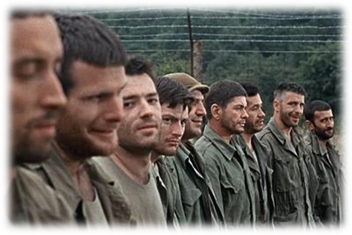
image“Now the tax collectors and ‘sinners’ were all gathering around to hear him. But the Pharisees and the teachers of the law muttered, “This man welcomes sinners and eats with them” (Luke 15:1 – 2)

Recently I was reading an article about who Jesus mixed with when he was on earth and the author noted that they seemed to be a thoroughly disreputable bunch (I loved that description). As I considered this I agreed and noted, as I often have, how Jesus surprised everyone in the way he overturned the way people thought. His disregard for what people “thought was right” angered, confused, amazed and often caused people to give up their former lives and follow him. I decided to look more closely at who Jesus chose to associate with.

“After this, Jesus went out and saw a tax collector by the name of Levi sitting at his tax booth. “Follow me” Jesus said to him and Levi got up, left everything and followed him.” (Luke 5:27 – 28)

Levi, also called Matthew, was one of those despised tax collectors. Firstly he was being paid by the hated Romans who were in control of Israel, to extract taxes from the Jews and secondly it was widely known that he cheated his own fellow countrymen by taking more from them than was expected. No self-respecting Jew would be seen in his company and yet here we see Levi holding a great banquet for Jesus andimage Jesus accepting to dine with him and other tax collectors. (Luke 5:29) Obviously Jesus saw something in Matthew that was not apparent to outsiders and we see the effect of meeting Jesus had upon him as he abruptly chooses to leave everything behind to follow this one who becomes his Lord and Master as he eventually becomes one of the apostles.

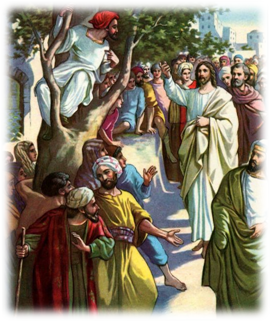
Zacchaeus also falls into this dubious bunch that Jesus mixes with, and he too has a life changing experience on meeting Jesus and realises how despicable his life style has become and cries out in repentance to him;

“..Look Lord! Here and now I give half of my possessions to the poor, and if I have cheated anybody out of anything, I will pay back four times the amount.” (Luke 19:8)

The list goes on and on from prostitutes, thieves, adulterers (the woman at the well) lepers, all being sought out by Jesus. Jesus chose to mingle with the poor, the outcasts of society, the underprivileged, the despised, nobody being considered unworthy to receive his love. He chose to ignore the restrictions of class or wealth. He chose to ignore race and bias. His love had and still has no bounds.

How do we see this being portrayed in our own lives? It is so easy to remain in our own comfort zone, to stay with those who look like us and have the same standards. It is so easy to dismiss others whose lives have taken a different turn from ours. It is hard to look beyond the external front people present and find the inner self who may be hurting. Looking deeply at Jesus’ example spurs us on to try to emulate him to ask him to allow us to look at others with the same compassion as he does. I love the words of this old hymn.

imageLord I Would Follow Thee

Who am I to judge another?

When I walk imperfectly

In the quiet heart is hidden

Sorrow that the eye can’t see

Who am I to judge another?

Lord I would follow thee.

Posted by: Jo | July 5, 2013

A Wildly Extravagant Gift

“Then Mary took about a pint of pure nard, an expensive perfume; she poured it on Jesus’ feet and wiped his feet with her hair. And the house was filled with the fragrance of the perfume.” (John 12:3)

image A few weeks ago one of my friends was telling me an interesting story about an occurrence at her church. She and several other ladies are in charge of setting up the altar for communion and part of their duties is to arrange the flowers for the Sunday service. Often members of the church wish to donate and dedicate the flowers for a special day. This could be to acknowledge an anniversary of a loved one’s death. The group was startled to receive a request from a man who wanted to honour his father’s passing from the year before. The request was not startling, but the amount of money the son wanted to give for the flowers was. He wanted $250 spent. There was much muttering amongst the ladies. Way too much money just for flowers. We could spend that money on something useful for the church. Why spend all that money? What dreadful extravagance!

As I was listening to my friend I suddenly thought of another extravagant gift that elicited similar responses. In the gospel of John we read where Mary decided to give Jesus a wildly extravagant gift in the form of expensive perfume poured out as an anointing upon his feet. We are told that perhaps this pure nard (as it was) was worth about a year’s wages. Her act caused a similar reaction, to those watching, to that of the ladies in my friend’s story. In the Mark version we read;

“Some of those present were saying indignantly to one another, ‘Why this waste of perfume? It could have been sold for more than a year’s wages and the money given to the poor…” (Mark 14:4 – 5)

Later, as I was intrigued by my friend’s story, I asked her what the outcome was and what decision had been made about the flowers. She told me that the ladies, despite their reservations, had gone ahead and bought the flowers. Every vase available was used. Others had to be borrowed, the church was overflowing with flowers in every nook and cranny, their fragrance filling the church. Again I thought of the story of Jesus’ anointing;

“…And the house was filled with the fragrance of the perfume.” (John 12:3)

But what was the most telling part of this story came during the service as when it was announced who and why the church was filled with flowers a lady was heard to remark;

“Oh how this son must have loved his father.”

She saw the love that prompted the gift rather than the cost.image

When my Home Group was studying this story of Jesus’ anointing, one of the questions was;

What would have been your reaction if you had been there and witnessed this anointing?

One of our members answered, “I would have immediately thought, oh, how she loves Jesus.”

There is no counting of cost when love motivates the gift, so perhaps this is why this beautiful story has been preserved in Scripture. Pure love does not count the cost.

How do we relate to this story in our own lives? We have been given the most wildly extravagant gift known to mankind;

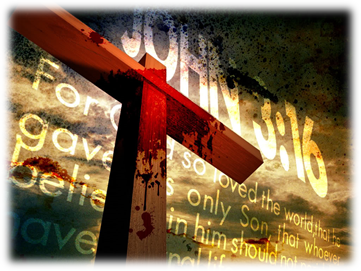
imageFor God so loved the world that he gave his one and only Son, that whoever believes in him shall not perish but have eternal life.” (John 3:16)

When we realise the generous nature of divine love we are more willing to be generous with our own love towards others, not counting the cost which is often not money but maybe, our time, our patience, our forgiveness, our understanding, our compassion, our friendship, our unconditional love and then others will see and remark, “Oh how they love Jesus.”

“Thanks be to God for his indescribable gift!” (2 Corinthians 9:15)

Posted by: Jo | June 28, 2013

Living Without Worry

“Therefore do not worry about tomorrow, for tomorrow will worry about itself. Each day has enough trouble of its own.” (Matthew 6:34)

imageIf you ask any member of my family who is the worst worrier within the family, they would be in agreement and select me. One of my daughters recently said to me, “You even worry that you are not worrying enough about us all.” I am ashamed to admit they are right and I constantly seek the Lord’s guidance to deal with what I know is a useless waste of time and time that would be better spent in speaking to the Lord, but I am not the only one with this affliction, in Canada there was a survey taken of a thousand workers and nearly half of them admitted that anxiety and depression affected their capacity to work efficiently. We live in a society that seems to be consumed by worries of all kinds, from financial, to health to job security. Apart from personal worries we have the looming threat of terrorism that lurks at the back of our minds, natural disasters are not far behind in creating anxiety when we read of earthquakes and floods. I decided to check out what the internet has to say about worry.

I was fascinated with what I found. Some of the quotes made me laugh, some were good advice. All of them were in agreement that worrying about anything was at least a waste of time and achieved nothing. I liked this one;

“Worrying is like a rocking chair, it gives you something to do and gets you nowhere.” – Glen Turner

This Swedish proverb also caught my attention;

“Worry often gives a small thing a big shadow.”

My favourite was this one;

“Do not be afraid of tomorrow, for God is already there.” – Unknown Author

In the Sermon on the Mount, Jesus was imploring us to focus on what does really matter, not on what we imagine might happen. image

“Therefore, I tell you, do not worry about your life, what you will eat or drink; or about your body, what you will wear. Is not life more important than food, and the body more important than clothes?” (Matthew 6:25)

The word that stands out for me in that passage is “life”. We have been created by a Heavenly Father who loves his children. When we dwell in his kingdom we automatically become recipients of all the benefits that citizenship has for those under the King’s protection. Life with him is what Jesus is telling us is the one true thing to concentrate upon, leave useless worrying behind. The psalmist reminds us of how mighty our God is;

“Blessed is he whose help is the God of Jacob, whose hope is in the Lord his God, the Maker of heaven and earth, the sea and everything in them – the Lord who remains faithful forever.” (Psalm 146:5 – 6)

Of course none of us go through life without some sort of trouble to worry us. Jesus tells us that quite plainly.

“…In this world you will have trouble. But take heart! I have overcome the world.” (John 16:33)

I have decided to do something about my excessive worrying. I have begun by researching all the comforting words in Scripture about how to deal with it and then my course of action is this. I now set before the Lord, each morning exactly what is worrying me. The list is long, but there is great relief just telling him, even some of the quite ridiculous ones, and then asking him to take care of them for me for the day. I  have to do it every day or those worries creep back and take me over again. A friend gave imageme a sweet little prayer which is also helping.

Healer of our every ill

Light beyond tomorrow

Give us peace beyond our fears

And hope beyond our sorrow.

Posted by: Jo | June 21, 2013

The Last Will Be First

“Sitting down, Jesus called the Twelve and said, “If anyone wants to be first, he must be the very last, and the servant of all” (Mark 9:35)

image Everybody who travels at all and lives on the lower mainland knows the woes of ferry line ups. One of my daughters has confessed that a burning “ferry rage” can start to build up inside of her as soon as her car enters that long line up, which begins before one even has the chance to pay. The uncertainty of not knowing if you will make your designated ferry can make one very anxious. Once when my husband and I were returning from the island we inched along slowly until there was only one car in front of us and as we held our breath it boarded the ferry and then out of the blue we were waved to a stop. We had missed our ferry! My husband’s only consolation to me was in this statement. “The last will be first, we will definitely make the next one.”

Oh how we hate to be last. Even toddlers just learning how to speak, quickly learn to shout,” me first” I was not considered an athletic sort of child, but the horror of becoming last in that race was enough to spur me on to at least finish with the pack in the middle. Equally horrifying was waiting to be chosen for a team from a group of children who looked very confident and fit. My silent prayer was always the same (please God don’t let me be the last one left so they are forced to choose me)

Modern society has no time for those who come last in anything. All the emphasis on any endeavor is that first place. Apart from athletic exercises, this striving to be first overflows into our everyday lives. How often have we heard the aggressive voice in the bank line up, the supermarket or the cinema? “Excuse me I was here first!”

How often have we expressed that same comment ourselves in exasperation with all the accompanying body language to emphasize our displeasure?

At school graduation time there are not many prizes for those who came last in the class.

Why then would Jesus make this strange remark about the first must be last?image

Perhaps he wanted us to realize that all this striving to be first was detrimental to ourselves and to those around us. How grateful we are when someone waves us in to that line of traffic and how good we feel when we step back and allow others to go ahead of us.

What a wonderful concept to instill in our children that being first is not always the best goal to aim for in life.

The second part of Jesus’ statement is equally at odds with what the world says.

“Servant of all” does not sit well with the modern motivational speakers’ advice on how to get ahead. Yet some of the great names of the Bible from Moses to Mary were willing to call themselves servants of the Lord

“….the people feared the Lord and put their trust in him and Moses his servant.” (Exodus 14:31)

“I am the Lord’s servant, “Mary answered…” (Luke 1:38)image

Even Jesus himself said he had come to “serve” and Paul describes him as “taking the very nature of a servant…” (Philippians 2:7)

When we think of “Servant of all” as being not doing menial tasks, but rather an attitude towards others, it takes on a whole different meaning.

The world would be a kinder place if we all practiced a little servant hood and learnt to quell that “Me first” reaction.

« Newer Posts - Older Posts »

Categories